


Blog
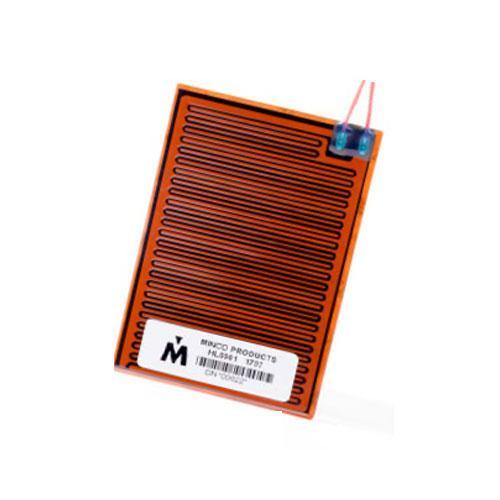
SmartHeat SLT™ Heaters for Aerospace: Why PTC Technology Is a Smarter Thermal Solution
In aerospace systems, thermal failures are not easy to access, repair, or recover from. Whether in satellites, spacecraft, or deep-space platforms, heating systems must operate reliably for years while minimizing weight, wiring, and control complexity.
That is why self-regulating PTC (positive temperature coefficient) heater technology is increasingly being adopted as an alternative to traditional PID-controlled thermal systems.
SmartHeat SLT™ Heaters from Minco are designed for these mission-critical environments, delivering passive, self-regulating heat without the need for external sensors, feedback loops, or controller hardware.
For aerospace engineers, this shift is not just about performance. It is about reducing system complexity, improving reliability, and lowering integration risk in environments where maintenance is not an option.
Why Aerospace Thermal Design Is So Challenging
Aerospace thermal management systems must perform across extreme and unpredictable conditions, including:
- Vacuum environments
- Cold start conditions
- Wide thermal cycling ranges
- High vibration and mechanical stress
- Long-duration unattended operation
At the same time, modern spacecraft and avionics platforms are under constant pressure to reduce:
- System weight
- Electrical power consumption
- Wiring complexity
- Integration and qualification burden
Traditional PID-controlled heating systems can meet performance requirements, but they rely on external sensors, feedback loops, and control electronics. Each added component increases system complexity and introduces additional potential failure points.
In aerospace applications, even minor increases in complexity can significantly impact reliability, SWaP (size, weight, and power), and qualification effort.
How SmartHeat SLT Works
SmartHeat SLT heaters use positive temperature coefficient (PTC) materials that inherently regulate temperature through their electrical properties.
As temperature increases, electrical resistance rises. This reduces current flow and automatically decreases heat output.
This creates a passive, self-regulating thermal response that does not require:
- External temperature sensors
- PID controllers
- Feedback loops
- Active control logic
In effect, the heater adjusts its own power output in real time based on its operating temperature, without any external decision-making system.
This behavior enables a simplified thermal architecture that reduces both design complexity and integration effort.
Why Self-Regulating PTC Technology Matters
Unlike traditional controlled heating systems that continuously adjust power through external control logic, SmartHeat SLT relies on inherent material behavior to regulate output.
This passive control approach provides several key advantages:
- Reduced system complexity through elimination of control hardware
- Lower risk of single-point failures associated with sensors and controllers
- Simplified electrical architecture with fewer interconnects
- Reduced qualification burden due to fewer system components
- Improved reliability for long-duration or inaccessible missions
For unmanned spacecraft and remote aerospace platforms, these benefits directly translate into higher mission assurance.
By eliminating external control loops, SmartHeat SLT reduces both wiring complexity and potential failure points in thermal system design.
Performance in Aerospace Thermal Applications
One of the most important characteristics of PTC-based heating is its response during cold start conditions.
At low temperatures, SmartHeat SLT delivers maximum power output, ensuring rapid and effective heating of critical components such as avionics, battery systems, optical assemblies, and electronic enclosures.
As the system approaches its operating temperature range, the heater naturally reduces power output through its intrinsic PTC behavior. This helps prevent thermal overshoot without requiring external control intervention.
This passive regulation is especially valuable in aerospace environments where controlled thermal ramp-up is required but active feedback systems add unnecessary complexity.
Fewer Components, Lower Integration Risk
In aerospace system design, every additional component introduces potential risk, including:
- Wiring connections
- Sensor failures
- Controller malfunctions
- Integration errors during assembly or testing
SmartHeat SLT heaters reduce these risks by consolidating heating and control behavior into a single self-regulating element.
This simplification supports:
- Reduced wiring harness complexity
- Lower integration and assembly effort
- Fewer failure points across the thermal subsystem
- Streamlined system verification and validation
For programs where reliability and predictability are critical, reducing component count is a direct path to improving overall system robustness.
Testing, Qualification, and Customization
Minco supports aerospace-grade validation and qualification processes to ensure SmartHeat SLT performance in demanding environments.
Testing capabilities include:
- Thermal vacuum (TVAC) environments
- Thermal cycling across wide temperature ranges
- Vibration testing for launch and operational stress
- Electrical characterization over operating conditions
- Vacuum bake-out for outgassing control requirements
- Lot acceptance and program-specific qualification testing
These capabilities support both prototype development and production-scale aerospace programs.
SmartHeat SLT heaters can also be customized for complex geometries and integration requirements, including:
- Curved and contoured surfaces
- Layered or embedded assemblies
- Encapsulation or lamination into system structures
- Application-specific thermal zoning
This flexibility allows engineers to integrate thermal solutions directly into system architecture rather than designing around them.
Reliability in Mission-Critical Systems
In aerospace applications, reliability is not optional. Systems must operate continuously for years without intervention, often in environments where repair is impossible.
SmartHeat SLT supports this requirement through:
- Passive thermal regulation with no active control dependency
- Reduced wiring and interconnect complexity
- Fewer electronic and mechanical failure points
- Stable performance across long-duration missions
By removing external control dependencies, the thermal subsystem becomes inherently simpler and more robust.
This is particularly important in spacecraft, satellites, deep-space probes, and other mission-critical platforms where system recovery is not feasible.
A Simpler Approach to Aerospace Thermal Design
As aerospace systems continue to evolve toward higher efficiency and greater autonomy, thermal management strategies must evolve as well.
SmartHeat SLT™ heaters provide a practical alternative to traditional PID-controlled heating systems by combining:
- Self-regulating PTC technology
- Reduced system complexity
- Flexible integration options
- Reliable performance in extreme environments
For engineers focused on reducing SWaP, simplifying system architecture, and improving long-term reliability, SmartHeat SLT represents a compelling solution for modern aerospace thermal design challenges.
By replacing complex control systems with passive thermal behavior, aerospace teams can build lighter, simpler, and more dependable systems without compromising performance.



