


Blog
Hazardous Area Stator Winding RTDs: The Complete Guide to Temperature Sensors for Motors and Generators
Protecting critical rotating equipment begins with accurate temperature measurement. In hazardous locations, that protection also requires sensors specifically designed and certified to prevent ignition in potentially explosive atmospheres.
Whether you're specifying sensors for a new motor, rebuilding a large generator, or upgrading an existing condition monitoring system, choosing the proper hazardous area stator winding RTD is essential for maximizing reliability, extending insulation life, and minimizing costly downtime.
In this article, we'll explore the critical design features that distinguish premium hazardous area stator winding RTDs from ordinary temperature sensors, while also examining complementary hazardous area bearing sensors that provide complete thermal protection for rotating machinery.
What Is a Hazardous Area Stator Winding RTD?
A stator winding RTD (Resistance Temperature Detector) is a precision temperature sensor embedded directly within the stator windings of an electric motor or generator. Unlike surface-mounted temperature sensors, winding RTDs measure the temperature where heat is actually generated, allowing operators to detect overload conditions, insulation deterioration, cooling system problems, and abnormal operating conditions before catastrophic failures occur.
When motors operate in hazardous locations—such as oil refineries, petrochemical plants, natural gas compressor stations, mines, hydrogen production facilities, grain processing plants, or offshore platforms—the RTDs themselves must also be certified for hazardous area installation.
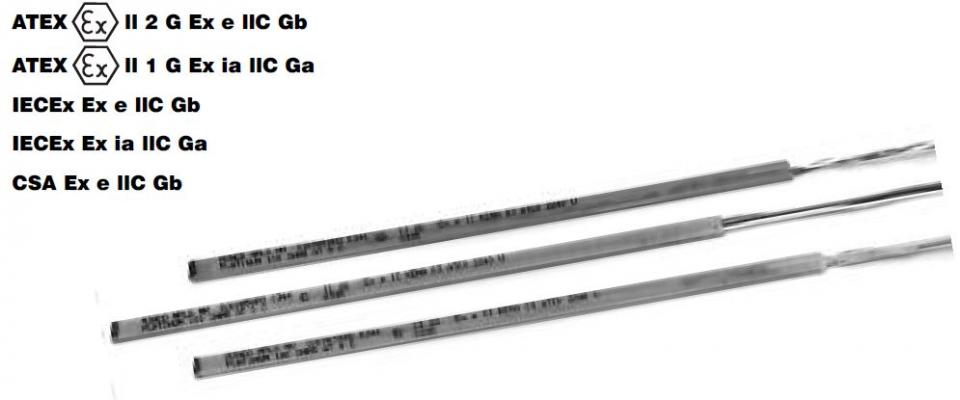
At Mod-Tronic Instruments, our S1 Series Hazardous Area Stator Winding RTDs are specifically engineered for these demanding applications and are available with CSA, ATEX and IECEx approvals.
Learn more: https://www.mod-tronic.com/s1-series-csa-atex-iecex-approved-stator-winding-rtds-1851.html
Temperature Monitoring Is About More Than the Stator
While stator winding temperature is often the primary indicator of motor health, most critical rotating equipment requires temperature monitoring at multiple locations.
A comprehensive protection system may include:
-
Stator windings
-
Journal bearings
-
Thrust bearings
-
Tilting pad bearings
-
Babbitt bearing shoes
-
Bearing housings
-
Cooling water
-
Lubricating oil
-
Ambient air
Mod-Tronic offers complete temperature sensing solutions for all of these applications, including:
-
Complete Stator Winding RTD & Thermocouple Product Family
https://www.mod-tronic.com/stator-winding-rtds-and-thermocouples.html -
Hazardous Area RTD & Thermocouple Assemblies for Bearings and Process Applications
https://www.mod-tronic.com/minco-hazardous-area-atex-iecex-csa-rtd-thermocuple-assemblies-1840.html -
Hazardous Area Miniature Embedment RTDs for Journal and Tilting Pad Bearings
https://www.mod-tronic.com/hazardous-area-iecex-atex-csa-miniature-embedment-rtd-temp-sensors.html
Selecting the correct combination of sensors provides complete thermal protection for the entire machine.
1. Hazardous Area Certifications Matter
One of the biggest mistakes engineers make is assuming all hazardous area approvals are equivalent.
Different installations require different certification methods.
Depending on your application, you may require:
-
CSA
-
ATEX
-
IECEx
-
SIL capability
-
NEC Zone approvals
-
CEC Zone approvals
-
Division approvals
The two most common protection methods for embedded RTDs are:
Increased Safety (Ex eb)
Ex eb sensors are designed so that under normal operating conditions they cannot generate sparks, arcs or excessive surface temperatures capable of igniting surrounding hazardous gases.
These are commonly used in:
-
Zone 1
-
Class I Zone 1
applications.
Intrinsic Safety (Ex ia)
Intrinsic Safety limits available electrical energy so ignition cannot occur—even under specified fault conditions.
These sensors are commonly installed in:
-
Zone 0
-
Zone 1
-
Class I Division 1
applications when used with approved intrinsic safety barriers.
Choosing the proper approval should always match the area classification and local electrical code requirements.
2. Wire-Wound vs Thin-Film RTDs
This is arguably the single most important design difference.
Wire-Wound Platinum Elements
Premium stator RTDs typically utilize wire-wound platinum sensing elements.
Advantages include:
-
Average winding temperature measurement
-
Excellent long-term stability
-
Minimal drift
-
Superior repeatability
-
Better thermal averaging
Because the sensing wire extends over much of the active sensor length, wire-wound elements measure the temperature of an entire section of the winding rather than a single point.
Thin-Film Elements
Thin-film sensors have a very small sensing region.
They work extremely well in many industrial applications but generally provide point temperature measurement.
For long stator winding sensors, wire-wound construction is usually preferred because it more accurately represents actual winding temperature.
3. Average Temperature Is More Valuable Than Point Temperature
Motor windings rarely heat uniformly.
Localized hot spots may occur due to:
-
Uneven loading
-
Cooling airflow restrictions
-
Manufacturing tolerances
-
Insulation degradation
A laminated winding RTD averages the temperature over its sensing length, providing a more representative indication of overall winding condition.
This results in:
-
Better motor protection
-
Reduced nuisance alarms
-
Improved temperature trending
-
Earlier fault detection
4. Thin Laminated Construction
A stator winding RTD must fit into extremely limited space between winding conductors.
Premium sensors feature:
-
Thin laminated construction
-
High mechanical strength
-
Smooth edges
-
Excellent flexibility
-
Durable insulation systems
This allows installation without damaging adjacent winding insulation.
5. High Temperature Materials
Industrial motors frequently utilize:
-
Class F insulation
-
Class H insulation
The RTD should utilize materials capable of long-term operation within these insulation systems.
Common materials include:
-
Epoxy glass laminates
-
Polyimide
-
PTFE
-
High-temperature adhesives
These materials contribute significantly to long service life.
6. Dielectric Strength
Because winding RTDs are installed directly alongside energized conductors, electrical isolation is critical.
High-quality RTDs provide excellent dielectric strength between:
-
sensing element
-
leadwires
-
motor windings
Proper insulation minimizes electrical leakage while improving operator safety and long-term reliability.
7. Leadwire Construction
Leadwires must withstand:
-
vibration
-
thermal cycling
-
oil exposure
-
moisture
-
mechanical stress
Important design considerations include:
-
stranded conductors
-
PTFE insulation
-
polyimide insulation
-
abrasion resistance
-
flexible construction
Leadwire quality is often overlooked but has a significant impact on service life.
8. Wiring Configurations
Most stator RTDs are available as:
-
2-wire
-
3-wire
-
4-wire
Three-wire configurations remain the most common because they compensate for lead resistance while remaining economical.
Four-wire RTDs provide maximum accuracy where required.
9. Platinum Resistance Options
The worldwide standard is:
Pt100 (α = 0.00385)
However other curves remain common including:
-
Pt100 0.00392
-
Ni100
-
specialty elements
Always verify compatibility with your monitoring relay, PLC or protection system.
10. Custom Dimensions
No two motors are identical.
Quality manufacturers offer custom:
-
length
-
width
-
thickness
-
lead length
-
lead exit
-
dual elements
Proper fit improves installation while maximizing thermal contact.
If your application requires other sensing technologies, Mod-Tronic also offers an extensive selection of standard and custom Stator Winding RTDs and Thermocouples.
Browse the complete family:
https://www.mod-tronic.com/stator-winding-rtds-and-thermocouples.html
11. Dual Element Sensors
Many critical motors utilize redundant sensors.
Benefits include:
-
backup protection
-
independent monitoring
-
increased reliability
-
simplified maintenance
Dual element RTDs are particularly valuable for generators and large process motors.
12. Long-Term Stability
Platinum RTDs provide:
-
excellent repeatability
-
minimal calibration drift
-
predictable characteristics
-
decades of reliable operation
These characteristics make them ideal for predictive maintenance programs.
13. Proper Sensor Placement
Even the highest-quality RTD cannot compensate for poor installation.
Industry best practice often recommends multiple sensors distributed throughout each phase of the stator.
Proper placement allows operators to detect abnormal heating long before insulation damage occurs.
14. Continuous Monitoring Beats Thermal Switches
Thermal switches only indicate whether a temperature limit has been exceeded.
RTDs continuously measure temperature, allowing operators to:
-
trend winding temperatures
-
identify deteriorating insulation
-
monitor overload conditions
-
optimize cooling
-
schedule maintenance before failure occurs
Continuous monitoring transforms temperature measurement from simple protection into predictive maintenance.
15. Don't Forget the Bearings
Many catastrophic motor failures originate in the bearings rather than the stator.
For hazardous area applications, bearing monitoring is equally important.
Mod-Tronic offers Hazardous Area RTD & Thermocouple Assemblies for:
-
bearing housings
-
oil systems
-
threaded installations
-
spring-loaded applications
-
process measurements
View the complete product family:
https://www.mod-tronic.com/minco-hazardous-area-atex-iecex-csa-rtd-thermocuple-assemblies-1840.html
16. Miniature Embedment Sensors for Babbitt Bearings
Large motors and generators frequently utilize journal or tilting pad bearings with babbitt linings.
The earliest indication of lubrication problems often occurs beneath the babbitt surface.
Miniature embedment RTDs are specifically designed to:
-
install beneath the babbitt
-
monitor true bearing metal temperature
-
detect oil film breakdown
-
provide early warning before bearing damage occurs
For these critical applications, Mod-Tronic offers Hazardous Area Miniature Embedment RTDs certified for hazardous locations.
Learn more:
https://www.mod-tronic.com/hazardous-area-iecex-atex-csa-miniature-embedment-rtd-temp-sensors.html
17. Selecting the Right Supplier
Choosing a hazardous area RTD involves much more than selecting a resistance value.
Engineers should evaluate:
-
certification
-
sensing element
-
construction
-
dielectric strength
-
leadwire materials
-
dimensions
-
wiring configuration
-
temperature rating
-
installation method
Working with an experienced supplier helps ensure the sensor will perform reliably throughout the life of the motor.
For more than 50 years, Mod-Tronic Instruments Limited has supplied temperature sensing solutions to electric motor manufacturers, repair facilities, utilities and industrial facilities throughout North America.
Our application engineers can assist in selecting the proper sensor for virtually any rotating machinery application.
Complete Your Motor Temperature Monitoring System
Whether you're protecting a new motor design or upgrading an existing installation, selecting the correct temperature sensors is one of the best investments you can make in machine reliability.
Explore our complete range of rotating machinery temperature sensors:
Hazardous Area S1 Series Stator Winding RTDs
https://www.mod-tronic.com/s1-series-csa-atex-iecex-approved-stator-winding-rtds-1851.html
Complete Stator Winding RTDs & Thermocouples
https://www.mod-tronic.com/stator-winding-rtds-and-thermocouples.html
Hazardous Area RTD & Thermocouple Assemblies
https://www.mod-tronic.com/minco-hazardous-area-atex-iecex-csa-rtd-thermocuple-assemblies-1840.html
Hazardous Area Miniature Embedment RTDs
https://www.mod-tronic.com/hazardous-area-iecex-atex-csa-miniature-embedment-rtd-temp-sensors.html
If you need assistance selecting the ideal hazardous area temperature sensor, contact the engineering team at Mod-Tronic Instruments. We'll help you specify the right sensor for your motor, generator, or rotating equipment application.
About Mod-Tronic Instruments Limited
Since 1972, Mod-Tronic Instruments Limited has been a trusted supplier of industrial temperature sensors and process instrumentation throughout North America. Our extensive portfolio includes stator winding RTDs, thermocouples, hazardous area temperature sensors, bearing RTDs, miniature embedment sensors, programmable transmitters, transformer monitors, and thousands of other industrial sensing products backed by knowledgeable application support and one of the industry's largest inventories.



